The U.S. Takes a New Approach to Refugee Admissions in 2025
President Donald Trump announced the lowest cap on refugee admissions to the U.S. in September. The 7,500 limit set for the 2026 fiscal year cycle, which began in October 2025, is far below the previous record of 18,000, which Trump designated during his first term. Former President Joe Biden had capped his four years at 125,000 each.
Most surprising in the presidential determination was a clear focus on primarily allocating an undisclosed majority of those slots to Afrikaners, an ethnic group of mainly Dutch origin from early settlers during the late 1600s. By the early 1900s, the Afrikaners had grown in power to lead the government of South Africa from 1948 to 1994. Their system of government was known for its apartheid system, which eventually garnered boycotts and international backlash. The country’s first multiracial elections instituted a democratically elected Black South African ruling party.
Currently, Afrikaners make up about four percent of the population in South Africa. Little evidence points to the group being discriminated against in the country, though the population on whole continues to suffer from violent crime and corruption.
Soon after entering his second term, Trump issued an executive order that accused the South African government of “taking aggressive positions toward the United States and its allies.” EO 14204 pointed to South Africa’s Expropriation Act, raising concerns of enabling land-seizures from minority Afrikaners’ agricultural lands. Similar to the “eminent domain” concept in the U.S., the legislation passed in early 2025 institutes land reform measures, which are supposed to hinge on redistributing land more equitably. It is still being questioned for its constitutionality.
The Trump EO hedges its stance on the “aggressive positions towards the United States and its allies” to South Africa’s accusations against Israel for the war in Gaza to the International Criminal Court in 2024.
When the South Africa President Ramaphosa and his delegation visited Washington, D.C., in May of this year, a group of Afrikaans-speaking South Africans also arrived, having been granted refugee status by Trump. Trump’s meeting with Ramaphosa did not go well. Trump accused Ramaphosa of white genocide numerous times during their meeting.
The South Africa government quickly rebuked the U.S. refugee limit and claim of white genocide, stating that such accusations from the U.S. were inaccurate and unsupported. Recently, they highlighted an open letter from many prominent Afrikaners in South Africa who opposed the U.S. stance on their country and ethnic group.
It will most likely do little to curb the push toward limiting immigration in general during the Trump Administration, as well as increase the tight refugee cap. The Migration Policy Institute counted 181 executive actions focused on immigration were introduced in just the first 100 days of the administration.
By Sherry Harbert
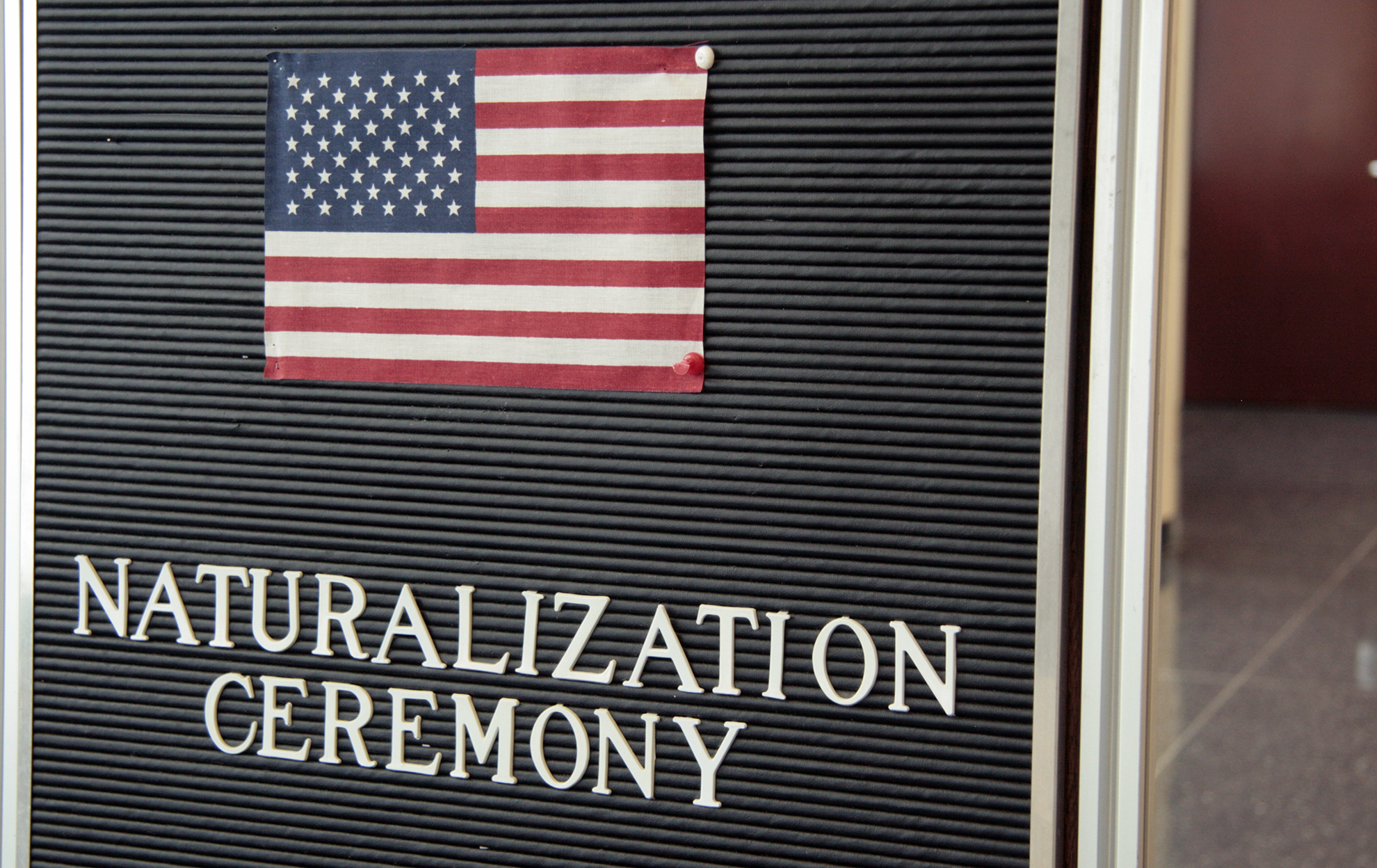
© 2025, Foreign Interest. Photo credit, Sherry Harbert, image of a Naturalization Sign for a ceremony at the Lloyd George United States Courthouse in Las Vegas, Nevada.